



Quick answer
Turkesterone is a plant-based compound that has become one of the most talked-about natural training supplements, valued for its potential to support muscle protein synthesis and recovery without interfering with the body’s own hormone balance. Here is how it works, what the science suggests, and what to look for in a quality product.
If you train hard and want your body to make the most of every session, you have probably come across Turkesterone. It has become a go-to for lifters who want to push past plateaus and support lean muscle growth without turning to anabolic steroids and the side effects that come with them.
Here is what Turkesterone is, how it is thought to work, and why so many athletes have added it to their stack.
What Is Turkesterone?
Turkesterone is a naturally occurring plant compound—a phytoecdysteroid—extracted from Ajuga turkestanica, a plant native to Uzbekistan and Tajikistan. It is prized for its structural similarity to the body’s own anabolic pathways.
That similarity to testosterone is exactly why it has drawn so much attention, but Turkesterone works differently from the hormones your body produces itself. Rather than binding to androgen receptors in the way testosterone or synthetic steroids do, Turkesterone is believed to work through a separate pathway—one linked to estrogen receptor beta and downstream signalling that supports muscle protein production.
In simple terms: Turkesterone is thought to give the body’s own growth machinery a nudge, rather than replacing or overriding natural hormone levels.
How Does Turkesterone Support Muscle Growth?
Research points to Turkesterone supporting the body’s protein synthesis process—the mechanism muscles rely on to repair and grow bigger and stronger after training.
Early research found that Turkesterone stimulated protein synthesis at a level comparable to a well-known anabolic compound, without the same hormonal disruption. More recent cell studies using muscle tissue have shown that phytoecdysteroids—the class of compounds to which Turkesterone belongs—can meaningfully boost markers of protein synthesis.
This is the foundation of Turkesterone’s reputation as a “natural anabolic”: early evidence pointing toward real, biologically active effects on the exact pathway that drives muscle growth.
How Does It Relate to Ecdysterone?
Turkesterone belongs to a wider family of plant compounds called ecdysteroids, alongside its well-studied relative, ecdysterone.
A landmark trial in resistance-trained men found that ecdysterone supplementation was linked to significantly greater increases in muscle mass over ten weeks compared with placebo—one of the clearest human demonstrations yet that this class of compounds can meaningfully support muscle growth.
Key takeaway
Because Turkesterone shares the same biological family and mechanism, it is a natural next step for anyone interested in this category, while research specifically into Turkesterone continues to catch up.
What About Recovery and Performance?
Beyond muscle growth, Turkesterone is popular for the way it may support faster recovery between sessions and help athletes push through strength plateaus.
The proposed mechanism—supporting nitrogen retention and reducing muscle breakdown—fits well with what athletes report:
- Less soreness after demanding sessions
- Quicker turnaround between heavy workouts
- The ability to train with greater consistency
That consistency is often where the real gains come from, since more quality training volume over time is one of the most reliable drivers of strength and size.
Why Athletes Choose It Over Traditional Anabolic Options
The appeal
Turkesterone is designed to work with your body—not around it.
Unlike anabolic steroids or hormonal precursors, Turkesterone does not bind to androgen receptors. This is why it is not associated with the harsher side effects linked to those compounds, such as hormonal disruption.
It is also why many lifters use it as a long-term training companion rather than something that requires the same caution as more aggressive performance compounds.
Is Turkesterone Safe?
Turkesterone has a favourable safety profile, with preclinical and short-term research reporting minimal adverse effects and good tolerability.
As a non-androgenic compound, it has not been linked to the side effects associated with anabolic steroids. That said, as with any supplement that interacts with biological pathways, it is worth using Turkesterone as directed and choosing a product that is third-party tested, since quality varies across brands in this category.
Important: If you have an existing medical condition, take medication, or are pregnant or breastfeeding, check with a healthcare professional before starting—just as you would with any new supplement.
Is Turkesterone Regulated for Competitive Athletes?
Turkesterone is not named on the 2026 World Anti-Doping Agency Prohibited List. If you compete, always check the latest list and the rules of your governing body, since anti-doping requirements can change and athletes remain responsible for the supplements they use.
Who Is Turkesterone For?
Turkesterone is best suited to anyone who is:
- Training consistently and looking to get more out of each session
- Wanting to break through a strength or size plateau
- Interested in natural, non-hormonal support for muscle growth and recovery
- Looking for an alternative to harsher performance compounds
As with any supplement, it works best as part of a solid foundation—proper training, good nutrition and enough recovery—rather than as a replacement for the fundamentals.
What to Look for in a Turkesterone Supplement
Quality matters more than the label alone. When choosing a Turkesterone product, look for:
- A clearly stated, standardised dose of active Turkesterone per serving
- Third-party lab testing or a certificate of analysis
- Transparent sourcing of the Ajuga turkestanica extract, rather than vague “proprietary blend” claims
German Pharma formulation
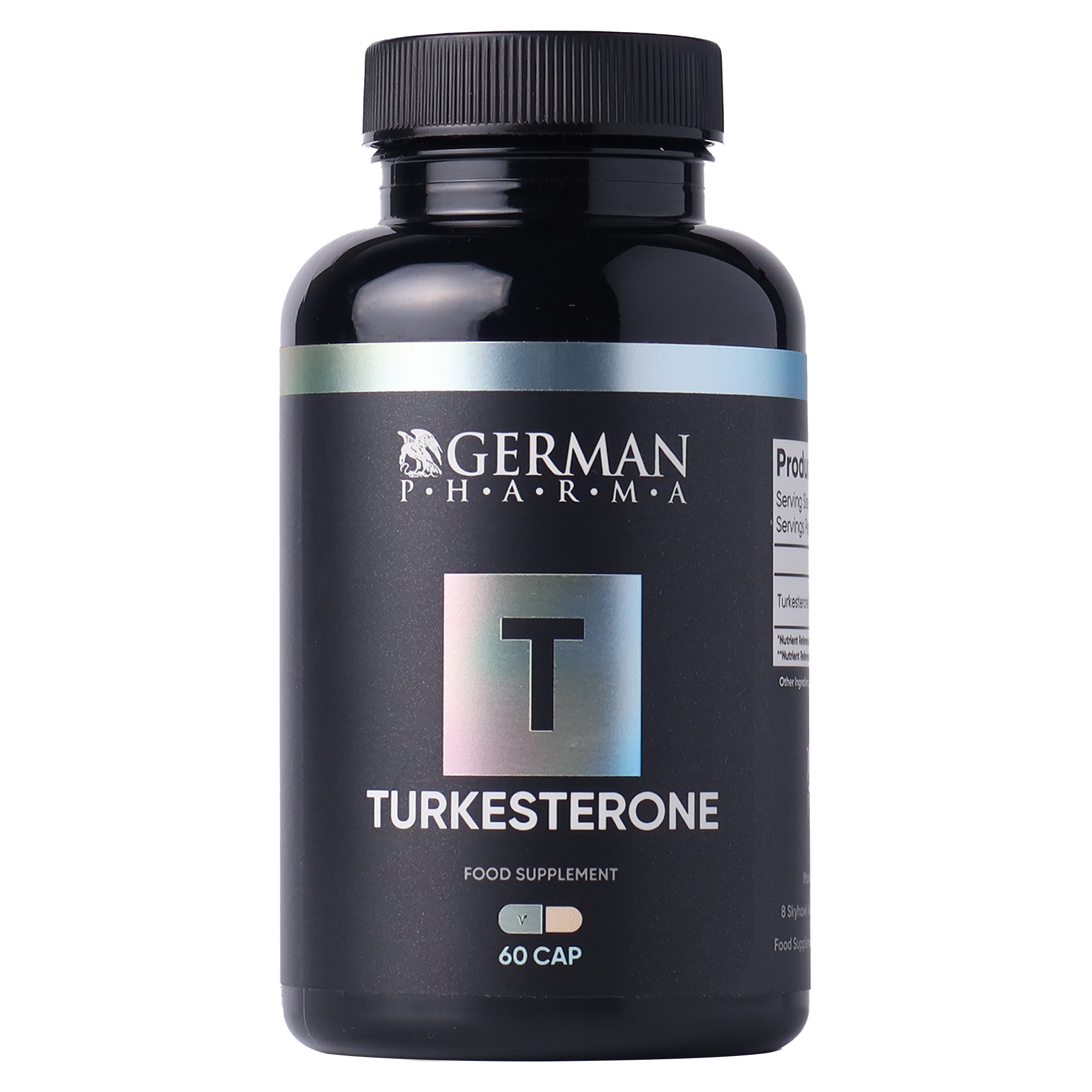
Our German Pharma Turkesterone is formulated to a standardised 500 mg dose per serving, using high-purity Ajuga turkestanica extract, so you know exactly what you are getting with every capsule.
The Bottom Line
Turkesterone stands out because it targets the same biological pathway the body already uses to build muscle, without the hormonal trade-offs of traditional anabolic compounds.
With a growing body of research behind its wider ecdysteroid family and a strong safety and tolerability profile, it is easy to see why Turkesterone has become a staple for lifters who want to train harder, recover faster and keep making progress naturally.
If you are serious about your training, Turkesterone is a smart, science-backed addition to your routine.
Frequently Asked Questions
What does Turkesterone actually do?
Turkesterone is thought to support the body’s natural protein synthesis process—the mechanism responsible for muscle repair and growth after training—while also supporting faster recovery between sessions.
Is Turkesterone the same as ecdysterone?
They are closely related plant compounds from the same ecdysteroid family and share a similar mechanism. Ecdysterone currently has more established human research behind it, and Turkesterone is part of the same promising category.
Is Turkesterone safe to take?
Research to date shows a favourable safety profile with minimal reported side effects. As with any supplement, choose a third-party tested product and check with a healthcare professional if you have an existing condition or take medication.
Is Turkesterone banned in sport?
Turkesterone is not named on WADA’s 2026 Prohibited List, though athletes should always check the latest list and the rules of their governing body.
How long does it take to see results from Turkesterone?
Most users take it consistently as part of an 8–12 week cycle to give the body time to respond, alongside regular training and a solid nutrition plan.