



Quick answer
Some clinical research links Tongkat Ali (Eurycoma longifolia) to modest testosterone increases and reduced stress-related cortisol, particularly in men who start with low testosterone or high stress. Results are inconsistent in healthy men with normal testosterone, and it is not a substitute for medical treatment.
Testosterone is often treated as though it is simply a number on a blood test. But it is part of a much bigger picture, involved in muscle mass, sexual function, energy, mood and overall male health. When testosterone dips, several of these areas can shift at once, which is why Tongkat Ali has become a popular natural option for men looking to support hormonal and physical performance.
This article breaks down what the research actually shows: whether Tongkat Ali raises testosterone, whether it helps libido and stress, and what you should realistically expect.
What Is Tongkat Ali?
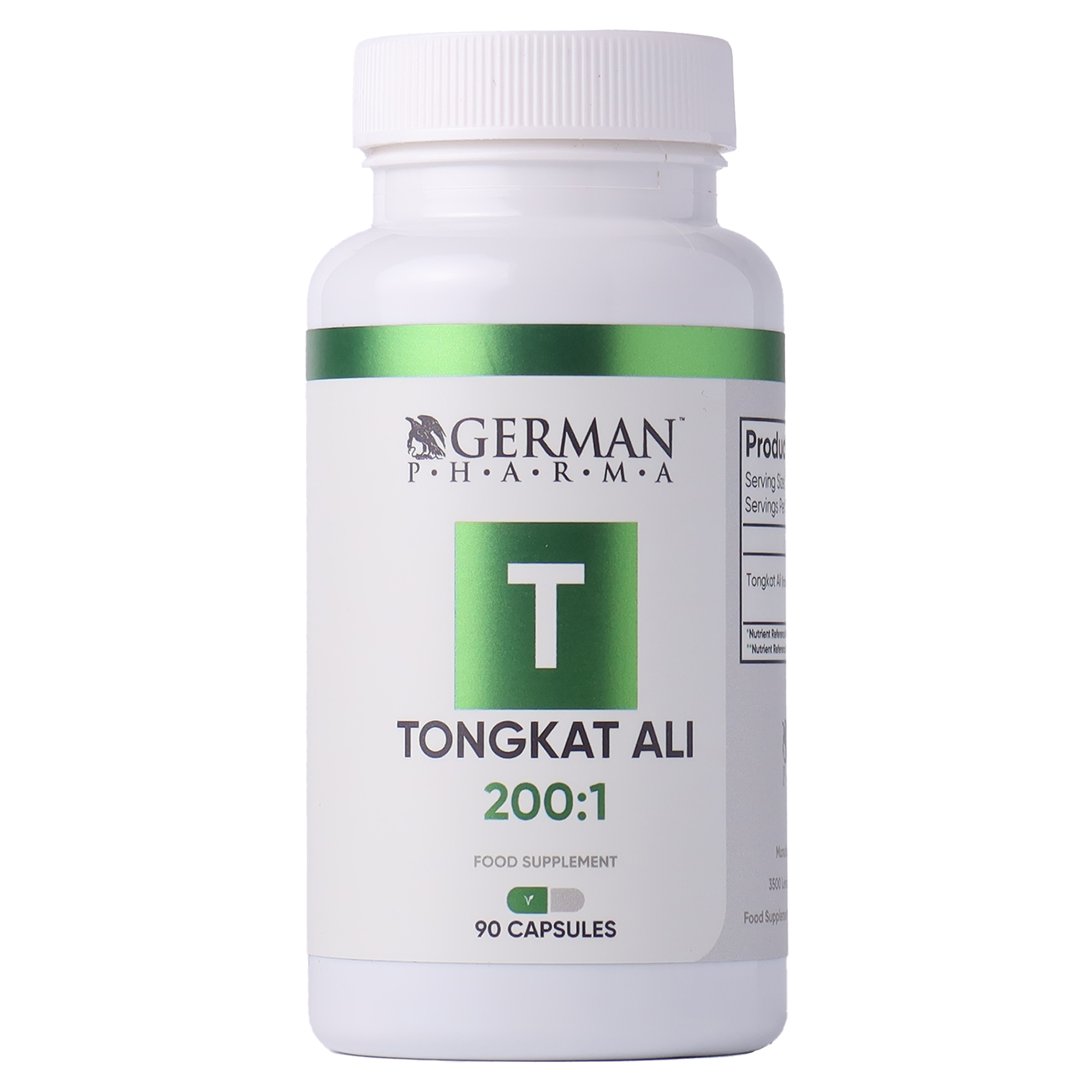
Tongkat Ali (Eurycoma longifolia) is a botanical extract studied for its effects on testosterone, stress response and male sexual health.
Calling it simply a “testosterone booster” undersells the picture. The body does not produce testosterone in isolation; it is regulated by an interconnected system involving the brain, adrenal glands, reproductive organs, sleep, stress and nutrition.
So the more useful question often is not “How do I force testosterone higher?” but “What is preventing my body from maintaining healthy hormonal function in the first place?” That question becomes especially relevant when you look at stress.
Does Tongkat Ali Reduce Stress and Cortisol?
Some human studies report reduced perceived stress and lower cortisol alongside testosterone changes after Tongkat Ali supplementation, but it does not simply “block cortisol.”
Modern stressors—work pressure, poor sleep, intense training, calorie restriction and mental fatigue—all influence the body’s hormonal environment. Cortisol and testosterone serve different functions but operate within the same physiological system. This is why researchers have explored whether Tongkat Ali has an adaptogenic effect: helping the body respond to stress more efficiently, rather than acting directly on any single hormone.
The more accurate framing: reducing excess stress may create a physiological environment more supportive of healthy testosterone production. That is different from saying the supplement forces a hormonal outcome.
Can Tongkat Ali Increase Testosterone?
It may, but the effect depends heavily on your starting point, and results across studies are inconsistent.
A systematic review and meta-analysis of clinical trials found Eurycoma longifolia supplementation was associated with improvements in total testosterone, with effects most notable in men who started with lower testosterone levels.
Other trials have studied it specifically in ageing men with androgen deficiency over several months. However, not every study agrees: one controlled trial in healthy men found no significant difference versus placebo after 12 weeks.
Key takeaway
Tongkat Ali is not a substance that automatically raises testosterone in everyone. Its effects appear more relevant for men with low testosterone, age-related decline or elevated stress—not those with already-healthy levels.
Why Might It Affect Testosterone?
Testosterone production runs through the hypothalamic-pituitary-gonadal (HPG) axis: the brain signals the pituitary gland, which signals the testes, which produce testosterone. Researchers have proposed that Tongkat Ali may influence stress regulation and hormonal signalling within this system via compounds naturally present in the plant.
It is worth being precise here: showing that a compound can influence a biological pathway is not the same as proving it produces a predictable outcome in every person. That distinction separates scientific discussion from supplement marketing.
What Would Higher Testosterone Actually Mean for You?
People hear “higher testosterone” and picture more muscle, more energy and more libido—automatically. Physiology is less tidy than that.
- If you have genuinely low testosterone, restoring it toward a healthy range may produce noticeable improvements in wellbeing.
- If your testosterone is already in a healthy range, the change—and its effects—are likely to be smaller or potentially negligible.
A supplement should not be judged only by whether it moves a lab number. The better question is whether that change translates into something you actually notice.
Tongkat Ali and Libido
Research has explored Eurycoma longifolia for male sexual health, including libido and erectile function, with reviews suggesting potential benefit, though study quality varies.
Sexual desire is not governed by testosterone alone. Psychological wellbeing, stress, sleep, relationship factors, cardiovascular health and general energy all play a role. So if Tongkat Ali benefits libido for some men, the mechanism may involve several interconnected factors—not testosterone in isolation. It is better understood as a compound studied for broader hormonal and sexual health effects, not a single-purpose “testosterone pill.”
Will It Give Me More Energy?
Not in the way caffeine does. If Tongkat Ali has an effect on energy, it is more likely tied to the underlying hormonal and stress environment over time—not an immediate stimulant effect.
Fatigue has many causes, including poor sleep, inadequate nutrition, overtraining, psychological stress and illness. Do not expect a sudden jolt after taking it; that is a different mechanism entirely from what is being studied here.
Does It Improve Physical Performance?
Tongkat Ali does not replace training, protein or adequate calories. It may support the hormonal and stress conditions in which good training produces good results.
Testosterone is closely tied to muscle development and performance, which explains Tongkat Ali’s popularity in fitness circles. Some studies have examined it alongside exercise programmes, looking at strength, fitness and hormonal markers together.
The most reasonable interpretation: it may support the environment for training adaptations; it is not the training itself.
The Stress–Testosterone Connection, Explained
Picture someone training five days a week, undereating, sleeping badly and working a high-stress job. Adding a testosterone-support supplement will not fix the root issue because the body is getting conflicting signals: perform more, recover less.
Hormonal health works as a chain
Sleep → Stress → Nutrition → Recovery → Hormones → Performance
Tongkat Ali is interesting because some research suggests it may interact with more than one link in that chain, particularly stress and testosterone together. But it cannot indefinitely compensate for poor lifestyle fundamentals.
Who Might Benefit Most?
Current evidence suggests Tongkat Ali may be more relevant for men with:
- Lower-than-optimal testosterone
- Age-related testosterone decline
- High psychological stress
- Reduced libido
- A demanding physical training load
Research reviews suggest testosterone effects are more apparent in men with lower baseline levels than in men whose testosterone is already healthy, which tracks physiologically. A system already functioning well has less room to improve; a system under strain has more room for a supportive intervention to make a difference.
This is why blanket claims such as “Tongkat Ali will massively increase your testosterone” deserve scepticism.
What Tongkat Ali Is Not
- Testosterone replacement therapy (TRT)
- Synthetic testosterone
- A guaranteed anabolic agent
- A substitute for medical treatment of hypogonadism
- An instant energy stimulant
- A guarantee of increased muscle mass
If you have symptoms of clinically low testosterone, the right first step is a proper medical assessment—not a supplement purchase. Tongkat Ali belongs in the conversation as supplemental support, not as a replacement for diagnosis or treatment.
Does Everyone Respond the Same Way?
No. Your starting point drives the outcome:
Genetics, age, diet, training status and overall health all factor in. Responsible supplementation does not promise uniform results; it identifies who is most likely to benefit and under what circumstances.
What Should You Look For in a Tongkat Ali Supplement?
The ingredient name on a label is not enough. Two products can both say “Tongkat Ali” while delivering very different amounts and quality of active compounds. Look for:
- A standardised extract with a stated active-compound percentage, such as eurycomanone content
- Third-party testing or certificates of analysis
- Transparent sourcing and dosing, rather than vague claims such as “maximum strength” or “ultra potency”
Is Tongkat Ali Safe?
Human studies have looked at Tongkat Ali across different populations, but the long-term safety evidence is not as extensive as it is for many established supplements. Avoid both extremes: “It is natural, so it is automatically safe” and “It affects hormones, so it must be dangerous.” Neither holds up.
Quality, dose, extract composition, individual health status and medication interactions all matter.
Important: Anyone with an existing medical condition, taking medication, or experiencing symptoms of a possible hormonal disorder should speak with a healthcare professional before using a hormone-active supplement.
The Bigger Picture
Testosterone is part of feeling like yourself at your best—energy, training, libido, recovery and drive—but it is not the whole picture. Hormonal health is a system, and supporting it means paying attention to sleep, nutrition, stress and exercise alongside any supplement.
The evidence on Tongkat Ali points to real but individually variable effects on testosterone, particularly in men with lower baseline levels or high stress, along with promising but inconsistent findings on libido and sexual wellbeing.
The most accurate description sits between “miracle testosterone booster” and “useless herbal supplement”: a scientifically interesting botanical extract with real human evidence, but effects that depend on the individual.
Support the body. Do not try to replace it.
Frequently Asked Questions
Does Tongkat Ali actually increase testosterone?
It can in some men, particularly those with lower baseline testosterone or high stress levels. Studies in healthy men with normal testosterone often show little to no effect.
How long does Tongkat Ali take to work?
Most clinical trials measuring hormonal changes ran for 4–12+ weeks. It is not a fast-acting stimulant, and effects—if any—tend to build gradually.
Is Tongkat Ali safe to take daily?
Short- to medium-term studies suggest it is generally well tolerated in healthy adults, but long-term safety data is limited. Anyone taking medication or living with a medical condition should check with a doctor first.
Can Tongkat Ali help with low libido?
Some research links it to improved libido and sexual function, though effects likely involve more than testosterone alone. Stress, sleep and overall wellbeing also play a role.
Is Tongkat Ali a substitute for TRT (testosterone replacement therapy)?
No. It is not testosterone replacement therapy or synthetic testosterone, and it should not be used as a substitute for medical treatment of diagnosed low testosterone.